Source Amorphous Transformer Core for Power Distribution
Find 30 listings for amorphous transformer core components suitable for power distribution and electronic applications. Compare specifications such as EI lamination, cold-rolled oriented silicon steel, and customizable sizes from suppliers in China to identify the right materials for your winding needs.
Key considerations
Products List


Comprehensive Sourcing Guide
Amorphous Transformer Core Sourcing Guide
Procuring amorphous transformer cores requires distinguishing between raw material strips and finished core assemblies, as the supply chain offers both distinct product categories. Buyers must verify whether the listing provides the raw 1K101 grade amorphous alloy strips or the fully wound circular and oblong cores designed for specific transformer applications. The observed market data indicates a wide variance in product configurations, ranging from simple EI laminations to complex multi-winding transformer cores, necessitating a clear definition of the required form factor before engaging suppliers.
The sourcing landscape includes suppliers from major manufacturing hubs like Shandong and Shanghai, offering products with varying voltage ratings and cooling methods. While some listings specify oil-immersed transformers with three-phase capabilities, others focus on the raw material properties such as the Fe, Si, B chemical composition essential for low-loss performance. Buyers should carefully cross-reference the listed model numbers, such as KCY or H876, against their specific engineering requirements to ensure the core shape and winding type align with the intended distribution or power transformer design.
Product Scope and Observed Listing Signals
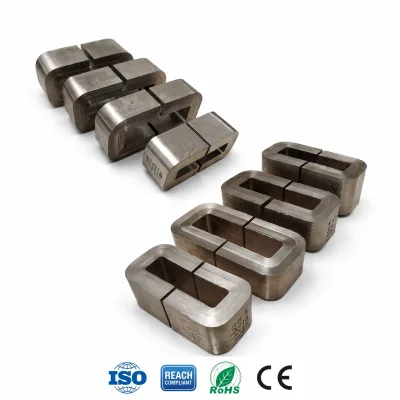
The product scope for amorphous transformer cores spans from raw strip materials to complete core assemblies tailored for circular, oblong, elliptical, or rectangular coil forms. Listings frequently highlight the "Strip" shape and "Core-type Transformer" construction, indicating that the core is designed to be wound around a specific wire specification, typically enameled wire. Buyers must confirm if the supplier provides the raw material for in-house winding or a pre-assembled core, as the "Customizable" nature of the product allows for significant variation in outer diameter and axial height, often constrained by limits like 600mm for the wire coil.
Observations of the market reveal a diverse range of applications, from general electronic usage to heavy-duty power distribution and power transformers. The presence of "Three-Phase" and "Multi-winding Transformer" attributes suggests that some suppliers offer integrated solutions for complex grid requirements, while others provide the fundamental "Oriented Silicon Steel" or "Amorphous Alloy" components. It is critical to verify the specific "Purpose" of the listed item, ensuring it matches the intended "Winding Circular" or other specific winding geometries required for the final transformer assembly.
Technical Specifications to Verify
Technical verification begins with the core material composition, specifically confirming the presence of Iron-based amorphous alloys with the Fe, Si, B chemical makeup that defines the 1K101 grade. Buyers must ensure the listed "Low Loss" and "High Magnetic Content" attributes are backed by the specific "Cold Rolled" technique or amorphous alloy processing methods described in the product data. The "Shape of Core" and "Winding Type," whether two-winding or multi-winding, must align with the transformer's electrical design to prevent efficiency losses or thermal issues during operation.
Dimensional and structural specifications are equally critical, with observed listings providing parameters such as an outer diameter under 600mm and an axial height under 800mm. The "Size of Machine" and "Installation capacity" data, such as the 25KW capacity mentioned in some records, serve as reference points for the scale of the equipment but do not guarantee the core dimensions for every unit. Buyers should explicitly request the exact "Outer Diameter of Wire Coil" and "Axial Height of Coil" for their specific order, as the "Customized Size" option implies that standard dimensions may not apply to all configurations.
Compliance and Safety Documentation
Compliance verification requires a rigorous check of the "Standard" and "Certification" documentation provided by the supplier, noting that while ISO9001 and RoHS are mentioned in background contexts, they are not confirmed as active certifications for every listed product. Buyers must demand explicit proof of adherence to the "GB" standard and any other relevant national or international safety regulations applicable to the "Power Frequency" and "Oil-immersed Type Transformer" applications. The absence of a specific certification claim in a listing should not be assumed to indicate non-compliance, but rather a need for direct confirmation from the manufacturer.
Safety documentation must also address the "Cooling Method" and the specific "Usage" environment, ensuring the transformer core is rated for the intended distribution or power application. The "Warranty" period of three years observed in some listings provides a baseline for quality assurance, but buyers should verify if this warranty covers the core material specifically or the entire transformer assembly. It is essential to confirm that the "Seaworthy Packing" or "Standard Wooden Box" packaging meets the safety requirements for transporting sensitive magnetic materials without damage during transit.
Cost Drivers and Commercial Terms
Cost drivers for amorphous transformer cores are heavily influenced by the material grade, specifically the 1K101 amorphous alloy, and the complexity of the "Winding Type" and "Shape" required. The "Customization" availability allows for tailored solutions but often introduces variable pricing based on the "Outer Diameter" and "Axial Height" specifications. Buyers should anticipate that specialized forms like "Circular" or "Oblong" cores may carry a premium over standard "EI Lamination" shapes due to the additional processing steps required to achieve the desired magnetic properties.
Commercial terms must be scrutinized regarding the "MOQ" range, which can vary significantly from single units to thousands, and the "Lead Time" associated with "Customizable" orders. The "Voltage" rating of 220V and the "Phase" configuration are key factors that influence the final price, as higher voltage or multi-phase requirements often necessitate more complex manufacturing processes. Buyers should clarify whether the quoted price includes the "Coating" process, such as Black Tape or Crepe Paper, which is essential for insulation and protection against environmental factors.
Supplier Qualification and Quality Control
Supplier qualification should focus on the geographic origin and manufacturing capability, with observed listings indicating production in China, specifically in regions like Shandong and Shanghai. Buyers must verify the supplier's ability to maintain consistent "Chemical Composition" and "Grade" standards across large production runs, as the magnetic properties of amorphous alloys are sensitive to processing variations. The "Technique" used, such as "Cold Rolled" or specific amorphous alloy formation, must be validated through factory audits or third-party quality reports to ensure the "Low Loss" claims are genuine.
Quality control protocols must address the "Product Packing" and "Standard" adherence, ensuring that items like "Lamination Sheet" or "Core-type Transformer" components are protected against physical damage and corrosion. The "Standard Wooden Box" or "Seaworthy Packing" options observed in listings should be evaluated for their ability to maintain the integrity of the core during international shipping. Buyers should request detailed inspection reports that confirm the "Shape" and "Size" of the core match the ordered specifications, particularly for "Customized Size" orders where tolerances are critical.
Long-Term Procurement Checks
Long-term procurement strategies should prioritize suppliers who demonstrate consistent performance in "Winding Type" and "Usage" applications over extended periods. The "Warranty" period of three years serves as a benchmark for expected product longevity, but buyers should establish clear protocols for handling potential failures or performance degradation in the field. Regular audits of the supplier's "Production Capacity" and "Installation capacity" data, such as the 25KW reference, help ensure that the supplier can scale production to meet future demand without compromising quality.
Continuous monitoring of the "Standard" and "Certification" status is essential to maintain compliance with evolving industry regulations and safety requirements. Buyers should maintain a database of supplier performance metrics, including delivery times, defect rates, and adherence to the "GB" standard, to inform future sourcing decisions. Establishing a long-term partnership with a qualified supplier ensures access to the latest "Amorphous Alloy" technologies and "Low Loss" innovations, securing a competitive advantage in the transformer manufacturing sector.
FAQs
What is the chemical composition of amorphous transformer core material?
The material consists of Iron, Silicon, and Boron. This specific Fe, Si, B composition creates an amorphous alloy structure. The alloy is designed for high magnetic content and low loss performance. It is suitable for winding circular coils and electronic applications. The grade 1K101 is a common specification for this type of core material.
Can amorphous transformer cores be customized for specific sizes?
Yes, customization is available for these cores. Buyers can request customized sizes to fit specific machine requirements. The standard outer diameter of the wire coil is less than 600mm. The axial height of the coil is less than 800mm. This flexibility supports various transformer designs and winding types.
What certifications apply to amorphous transformer core products?
Products are certified under ISO standards. The material is an iron-based amorphous core. It is suitable for power frequency applications. The core type is typically a core-type transformer. This certification ensures quality for distribution and power transformer usage.
How are amorphous transformer cores packaged for shipping?
Packaging options include wooden boxes and seaworthy packing. The standard packing is a standard wooden box. Customizable packing is also available for specific needs. The product origin is often China or Shandong. This ensures safe transport for sensitive core materials.
What is the warranty period for amorphous transformer cores?
The warranty period is 3 years. This coverage applies to the core material and construction. The product is suitable for winding circular coils. It features a low loss advantage. The warranty supports long-term reliability in power applications.
Which transformer types use amorphous core technology?
Amorphous cores are used in distribution and power transformers. They are suitable for multi-winding and two-winding designs. The cooling method is often oil-immersed. The phase is typically three-phase. This technology is ideal for electronic and power applications.